


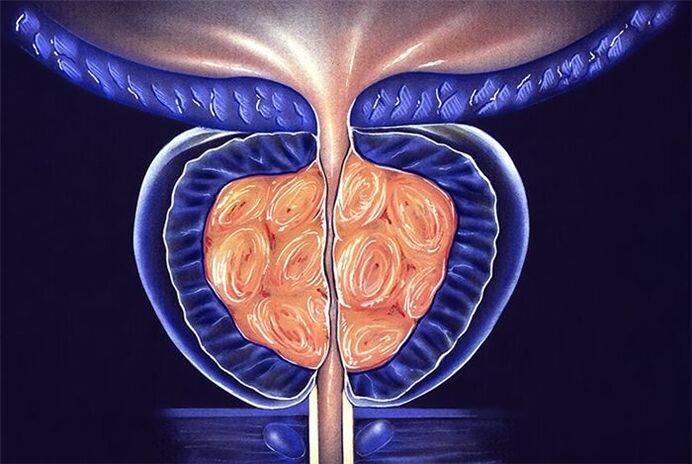
Many men suffer from chronic prostatitis, but they attribute the symptoms to other illnesses or waste time with ineffective treatments.From our article you will learn complete information about this male problem: causes, exact symptoms and diagnostic methods, various treatment methods.
Despite all the successes of modern medicine, the diagnosis of a disease such as chronic prostatitis poses certain difficulties.This also negatively affects the effectiveness of its treatment.
What is chronic prostatitis
In ICD-10 (International Classification of Diseases, 10th revision), there is no such disease as "chronic prostatitis".There is also no generally accepted single characteristic for this pathology.In urological practice, it is customary to use the classification developed by the AHI (American Institute of Health).It defines categories of prostate diseases.Those that can be described as “chronic” include:
- chronic bacterial prostatitis;
- chronic abacterial prostatitis.
To make these diagnoses, the following symptoms are necessary: prolonged pain (at least 3 months) in the perineal region.Thus, chronic prostatitis can be called a long-term inflammatory process, the consequence of which is a change in the structure of the prostate and its dysfunction.But other prostate diseases also lead to sad results.The diagnosis of chronic prostatitis is therefore difficult.
Epidemiology
Prostatitis is one of the most common diseases among men.This has a significant impact on performance and family relationships.The quality of life of patients decreases to the same extent as that of people who have had a heart attack or suffer from angina.
According to data from various sources, every third or fourth man is diagnosed with prostatitis.And most often it is not the initial or acute stage of the disease, but an already formed and long-term process - chronic.
Not so long ago it was generally accepted that this pathology was characteristic mainly of elderly men.But statistical data refuted this opinion.Today, we know that chronic prostatitis is a disease that affects men of childbearing age and who are sexually active.
More than 30% of patients consult a specialist for complaints characteristic of chronic prostatitis.Often, during a visit to the doctor, the disease is complicated by concomitant pathologies: erectile dysfunction, vesiculitis, primary or secondary infertility, epididymitis.
Causes of chronic prostatitis
The causes of chronic prostatitis are very different.Among the variety of negative factors affecting a man's health, it is difficult to single out exactly those that provoked the development of the disease.It is often a set of situations and circumstances accompanying a man's life.
The main causes of chronic abacterial prostatitis are:
- dysrhythmia (irregularity) of sexual intercourse;
- physical inactivity, typical of overweight people;
- long-term stressful conditions;
- the predominance of foods high in fat in the diet;
- negative impact on the body in hazardous industries.
Chronic bacterial prostatitis is the result of incompletely cured bacterial prostatitis.Or the man ignored the diseases and did not seek help from a urologist.No treatment was therefore carried out.
Chronic prostatitis of the abacterial type develops due to exposure to infectious agents against the background of decreased immunity.As a rule, such patients are diagnosed with diseases of the endocrine system.
The factors that provoke the development of chronic bacterial prostatitis are:
- surgical operations on the prostate (if no antibacterial treatment was carried out before the operation);
- refusal to use contraception;
- lack of habit of keeping your body clean.
Symptoms of chronic prostatitis
There are many myths about chronic prostatitis today.For this reason, any temporary disturbance in sexual function is attributed to this disease.We often hear the opinion that decreased libido and erectile dysfunction are due to prostatitis, and if it is an older man - chronic prostatitis.
This is not true, because sexual dysfunction has many other causes and the main symptom of chronic prostatitis is pain.All other signs can be considered concomitant and indirect.
Chronic prostatitis is often confused with pelvic pain syndrome because the symptoms of these conditions are largely similar.This is due to the formation of myosfacial trigger zones near the prostate, which appear as a result of injuries and surgical procedures.Pain in these areas may be confused with a symptom of prostate inflammation.
When diagnosing the disease, complaints of pain and discomfort in the perineum and pelvis, lasting at least 3 months, are highlighted.The pain is localized near the prostate and radiates to the sacrum, rectum and scrotum.With prolonged exposure to negative factors (carrying heavy objects, excessive physical activity, standing for a long time), the pain intensifies.
A characteristic sign of the disease is premature ejaculation.Patients experience decreased sexual desire and erectile dysfunction.These symptoms are also characteristic of other genitourinary diseases.We cannot therefore say that they are characteristic of chronic prostate disease.
An important symptom is the disappearance of orgasm.If the patient begins to notice that the severity of sensations during ejaculation has disappeared, this is a reason for a more attentive attitude to his health and a signal about the need to consult a urologist.
The structure of the inflamed prostate becomes denser, the pressure on the urinary tube increases, and the quality of urination deteriorates.Patients with chronic prostatitis notice a frequent urge to urinate at night.The process of urinary excretion is accompanied by a burning sensation, tingling and pain.Urinary incontinence occurs often.
Signs of chronic prostatitis can be expressed in full or in part.Much depends on the patient's health status and the presence or absence of other diseases.Chronic prostatitis is characterized by a wave-like course, with waxing and waning symptoms.With this disease, the inflammatory process is not acute.
Diagnosis of chronic prostatitis
In the presence of pronounced symptoms, it is not difficult to diagnose chronic prostatitis.But this disease is often asymptomatic, which complicates its detection.For diagnostic purposes, a whole series of studies are carried out.
The Association of Urologists has developed questionnaires that can help identify asymptomatic chronic prostatitis.The questions are worded in such a way as to clarify the patient's subjective feelings.Not all men are able to give a correct assessment of their erectile function, quality of orgasm and other details of sexual life.The questionnaires completed by the patient provide the specialist with the information necessary to make a diagnosis.In urological practice, the NIH-CPS scale is most often used.
In order to differentiate chronic prostatitis from other diseases, a neurological examination is carried out.The list of diagnostic methods used includes clarification of the patient's immune status.
Laboratory research methods
If chronic prostatitis is suspected, first of all they find out what its nature is: bacterial or abacterial.In the first case, it is necessary to identify the pathogen(s) and to know which drugs they are sensitive to.To do this, laboratory analyzes of urinary and prostate secretions are carried out.
If, after a period of 10 days after DRE, the PSA test shows that the level of prostate specific antigen exceeds 4.0 ng/ml, this is a reason to refer the patient for a biopsy in order to exclude an oncological process.
The following search methods are recommended:
- urethral scraping;
- general and biochemical urine analysis;
- LHC culture of prostate secretion.
Instrumental research methods
TRUS (transrectal ultrasound) is performed using equipment equipped with an instrument inserted into the patient's rectum.If a hypoechoic zone of irregular shape is detected, there is every reason to suspect a malignant tumor.With chronic prostatitis, scarring, compaction of the structure of glandular tissue and changes in the seminal vesicles can be observed.
UDI is the main method of functional diagnostics.It allows you to know the nature of urination, the signs of urine stagnation and its composition.The study includes several tests: flowmetry, cystometry, measurement of residual urine volume, assessment of pressure inside the bladder and urine flow.
Tomography (computed or magnetic resonance imaging) is necessary to exclude benign and malignant neoplasms.These research methods are very informative and help to assess the condition of prostate tissue.
Treatment of chronic prostatitis
Treatment of chronic prostatitis requires an integrated approach.Taking medication alone is not enough.Physiotherapeutic procedures and therapeutic exercises are necessary.In general, chronic prostatitis is difficult to treat and requires a radical lifestyle overhaul, changes in habits and, in some cases, a change of job.Urologists insist that only a set of measures will completely get rid of this disease or ensure long-term remission.
Whether the disease is bacterial or abacterial in nature, prostate congestion played a major role in its formation.The viscous secretion deposited in the ducts of the gland constitutes a favorable environment for the development of pathogenic and opportunistic microorganisms.Therefore, the main attention should be paid to eliminating stagnation.
The problem can be solved by changing the lifestyle and including physiotherapy classes in the daily schedule.
Exercise complexes have been developed, adapted to different life situations:
- for men who are forced to sit most of the time (drivers, office workers, managers);
- for people who are overweight;
- for those who don't have time to do exercises.
Having thought about how to treat chronic prostatitis, you should decide to seriously reconsider your attitude towards your health.
Treatment of acute prostatitis
Acute prostatitis requires bed rest, a special salt-free diet and sexual rest.
Course processing methods:
- The most effective treatment for prostatitis is etiotropic therapy.If prostatitis is an infection, a course of antimicrobial agents is a priority, which relieve the manifestations of inflammation.
- Pain syndrome is relieved by analgesics, antispasmodics, rectal suppositories, microenemas with warm solutions of painkillers.NSAIDs may be used.
- Immunostimulants, immunomodulators, enzymes, vitamin complexes and a combination of microelements have proven their effectiveness.
- Physiotherapeutic methods are possible only in the subacute stage of the disease.They improve microcirculation and increase immunity: UHF, microwaves, electrophoresis, laser, magnetotherapy.
- Massage is another effective method of influencing the prostate.It opens the ducts, normalizes blood circulation in the scrotum and pelvis.
- Acute retention of renal filtrate can be corrected by catheterization and trocar cystostomy.
- The purulent process involves surgical intervention.
- Psychologist consultations.
Treatment of chronic prostatitis
With a long-term (at least a month) effect on the prostate, there is no 100% guarantee of cure.Priority goes to medicinal plants, immunocorrection, changing household habits:
- Herbal preparations are widely used in urological practice.They are able to accumulate at the site of the most active pathological process, protect cells from oxidation, eliminate free radicals and prevent the proliferation of glandular tissue.
- Antibacterial therapy is selected individually, depending on the sensitivity of microbes to drugs.
- Medicines that strengthen immunity not only help to cope with prostatitis, but also correct the negative effects of antibiotics that disrupt the functioning of the immune system.
- The pain syndrome is relieved by the administration of alpha-blockers and muscle relaxants.
- Prostate massage allows you to mechanically remove “extra” secretion from the gland through the urethra, improve blood circulation and minimize congestion.
- Physiotherapy: laser, magnet, ultrasound, iontophoresis, hot sitz baths or herbal microenemas.
- In severe cases, intravenous fluids containing diuretics are indicated.This stimulates abundant urine production, prevents symptoms of intoxication, the development of ascending cystitis and pyelonephritis.
- For constipation, herbal laxatives are used.
- The urologist and psychologist, together with the patient, develop an individual long-term program including a daily routine, the necessary rest, diet, dosed physical activity and sexual activity.
- If the chronic process resists treatment and the flow of urine is blocked, surgical intervention is prescribed: removal of all affected tissues (transurethral resection of the prostate) or complete removal of the gland along with surrounding tissues (prostatectomy).Practiced in exceptional cases, it is fraught with impotence and urinary incontinence.Young people do not undergo surgery because it can cause infertility.
Recommendations for outpatient treatment
The patient should avoid situations in which he or she could suffer injury to the pelvic organs.
You must avoid any stress on the prostate: do not ride a bike, do not do strength training exercises, do not carry weights.
If the work is sedentary, every 2-3 hours you need to warm up by doing squats, leg swings and running in place.
You should try to normalize your sex life, which is extremely important to eliminate stagnation of secretions in the prostate.
It is recommended to limit alcohol consumption to minimal doses or eliminate alcohol consumption altogether.
Treatment with medications
For chronic prostatitis, outpatient treatment is mainly carried out.If the pathological process persists and it is not possible to achieve remission with this method, hospitalization is recommended.In a hospital, under the supervision of medical staff, there are much more opportunities to comply with the regime and monitor the development of the patient's condition.
Chronic prostatitis in men develops against the background of endocrine disorders.In this regard, 5-alpha reductase inhibitor drugs and alpha 1-blockers are recommended.They help to normalize hormonal levels and eliminate symptoms of pathology.For these purposes, drugs such as Finasteride and Terazosin are prescribed.
An integrated approach includes taking medications such as:
Methods for treating chronic bacterial prostatitis
Chronic bacterial prostatitis is treated with antibiotics.The most effective drug for a particular patient is determined using a preliminary laboratory study of prostate secretions.
There is no universal drug to suppress and destroy pathogenic microflora.What helps one patient may not help another.For this reason, there are many negative reviews regarding drugs advertised for the treatment of chronic prostatitis.
The drugs recommended for antibacterial treatment are fluoroquinolones.Most bacteria are sensitive to it.
Antibiotics may also be included in the treatment plan for patients with abacterial prostatitis.This therapy is carried out for preventive purposes.According to indications, treatment with penicillin drugs is included.
After the antibacterial treatment is completed, treatment with hormonal drugs begins.
In case of intraprostatic reflux, it is necessary to take α-blockers.
For pain, analgesics are effective.
Treatment with medicinal plants
Many people doubt whether chronic prostatitis can be cured using medicinal plants.The answer to this question was obtained thanks to many years of use of these healing agents in urological practice.
Today, the following therapeutic complexes are recommended:
All of these drugs have a beneficial effect on the functioning of the male genitourinary system.Effective treatment of chronic prostatitis is possible provided that urinary function is normalized.The components included in medicinal plants fulfill this task.They help reduce the frequency of impulses and eliminate slow flow syndrome.
For patients with chronic prostatitis, herbal mixtures containing pumpkin extract or pumpkin seeds are recommended.The latter have a unique chemical composition and act in three directions at once:
- normalize metabolism;
- strengthen the walls of blood vessels;
- activate blood circulation in the pelvic organs.
Taking medicinal plants cannot be considered the main method of treatment.These health-enhancing agents are considered concomitant with drug treatment.
Non-drug treatment
Non-drug therapeutic methods make it possible to act directly on the prostate, increase the concentration of drugs in its tissues and help eliminate congestion.
For these purposes, the following techniques are used: rectal ultrasound;
Microwave hyperthermia is performed using a rectal probe inserted into the patient's anus.The device can be used to set the temperature required for a specific type of exposure.To increase the concentration of the drug in the prostate, heating to 38-40°C is necessary.To obtain an antibacterial effect – 40-45°C.
Today, non-drug treatment focuses on laser therapy.The possibilities of this technique are wide.Under the influence of a laser, the following processes occur in the prostate:
- activation of redox reactions;
- blood microcirculation improves;
- new capillaries form;
- pathogenic microflora is suppressed;
- The process of cell division is activated, which promotes tissue regeneration.
During the period of research into the effects of laser therapy on patients with prostatitis, a side effect, but positive for therapeutic purposes, was noted.Those who completed the course increased their potency, eliminated erectile dysfunction and regained vitality.To achieve this result, it is necessary to use a beam of a specific wavelength.Generally, low-level laser radiation is used to treat chronic prostatitis.
Patients can, on their own initiative, undergo a course of laser therapy if it is not prescribed by the attending physician.
Surgical treatment of chronic prostatitis
Chronic prostatitis does not pose a threat to the patient's life, but can significantly reduce its quality.The most serious complication of this disease is the formation of stones in the tissues of the gland.In order to free it from the prostatoliths, a transurethral resection is used.
The surgical procedure is carried out under TRUS control.
If complications such as prostate sclerosis arise, transuretal electrosurgery is performed.If sclerosis of the bladder neck is observed in association with this pathology, partial resection of the prostate is performed.
When the seminal and excretory ducts are blocked, endoscopic operations are indicated to eliminate the obstruction of the permeability of secretions.For this purpose, an incision is made in the seminal vesicles and excretory ducts.In the event of an abscess, complete removal of the gland is possible.
Exercises for the treatment of chronic prostatitis
There are a number of effective exercises to stimulate the prostate, which helps relieve congestion.This complex was developed for patients suffering from hip joint problems.Practice has shown that these exercises are also useful for people with prostatitis.Classes can be held at a convenient time;the complex will take no more than 15 minutes.
Exercise #1
- Lying on an exercise mat, straighten both arms.
- Bend your knees and pull them towards you, simultaneously spreading them in different directions.
- Raise the pelvis as much as possible.
- Repeat 10 to 12 times.
Exercise #2
- Standing on the mat, do deep squats.
- Repeat 10 to 12 times.
Exercise #3
- Lie on your stomach.
- Raise one leg, then the other.
- Repeat 10 to 12 times.
When performing this set of exercises, all movements should be smooth.This is the main condition for obtaining a high therapeutic effect.
Treatment prognosis
Few men can completely cure chronic prostatitis.Prostate inflammation often enters a long-term remission phase.But when conditions arise for the activation of the pathology, a relapse occurs.An exacerbation begins with the appearance of pain in the prostate.They are often accompanied by urinary problems.At the first symptoms of relapse, you should seek help from a specialist.
Patients are recommended to visit a urologist regularly, at least once every six months.With the same frequency, they carry out examinations of the state of the prostate and take a PSA test.By systematically monitoring the condition of the gland, the processes provoking a relapse of the disease can be identified in a timely manner.But even with long-term remission, there is no guarantee that it will not be disrupted.
The patient should follow the recommendations to prevent exacerbations of the disease.It is recommended to balance your diet by excluding fatty and spicy foods.The use of medicinal plants and traditional medicine must be agreed with the attending physician.With this approach, the risk of exacerbation of chronic prostatitis can be minimized.
Prevention
To prevent the occurrence of an unpleasant disease for men, you need to eliminate the provoking factors and follow simple rules:
- Lead a healthy lifestyle, give up bad habits.
- Don't be too cold.
- Drink at least 1.5 to 2 liters of water per day.
- Strengthen your immune system, walk a lot, toughen up.
- Take part in physical education and sports, visit fitness clubs.
- Avoid stressful situations.
- Have a regular sex life with a regular partner.